

Mom on the Border
After immigrating from Mexico as a child, Argelia Rico has spent her whole life caught between two worlds. But her daughter keeps her anchored.

MOM: Argelia Rico
JOB: Registered Behavior Technician
LOCATION: Las Vegas, Nevada
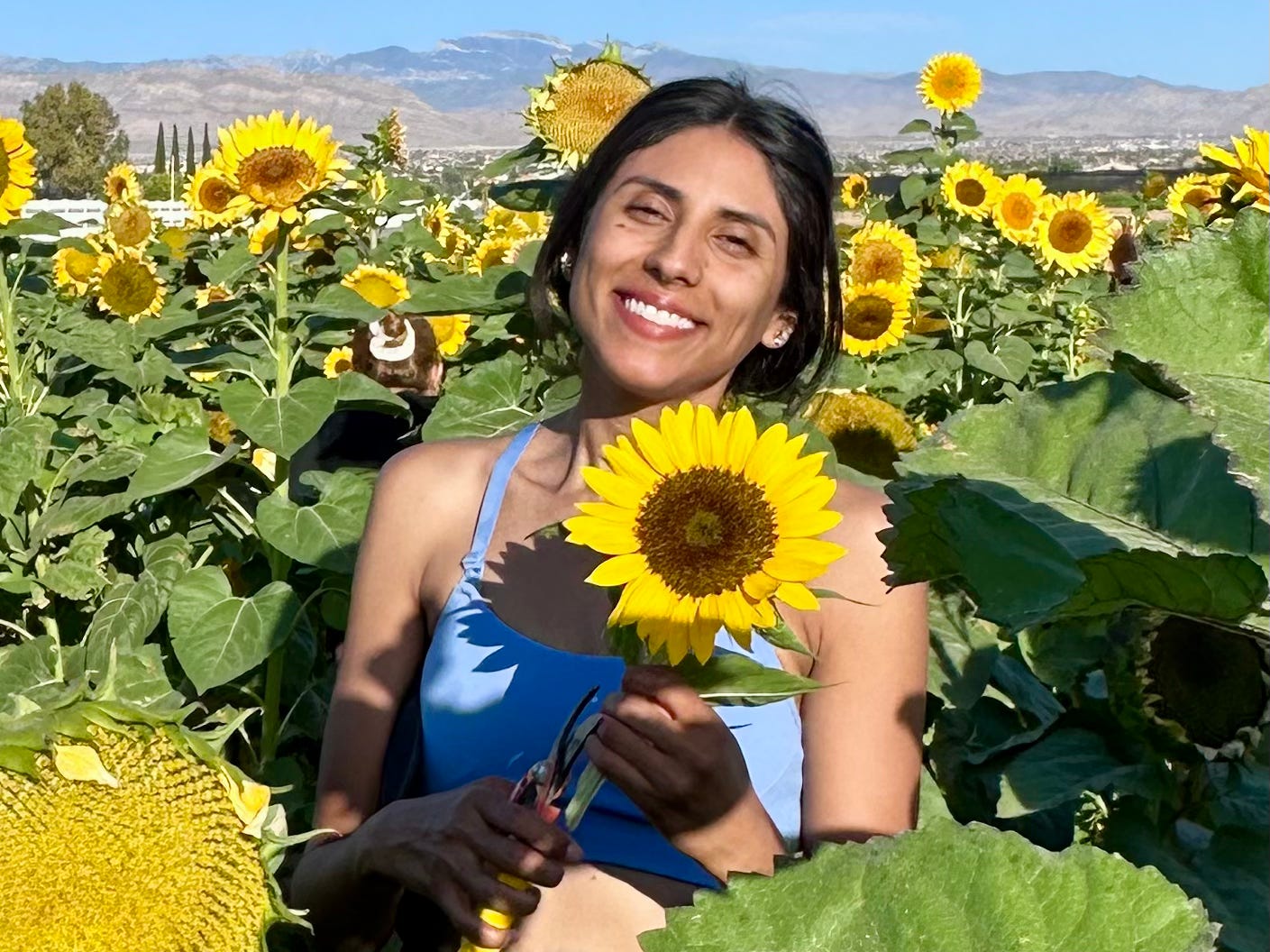
“The first time we crossed the border, my mom paid someone off to let us through. I was an infant and my sister was barely a toddler. She carried me in her arms and held my sister’s hand.”
In case you weren’t aware, the World Cup is in full swing. As a fair-weather fan who only shows up during major tournaments, I ordered my jersey months ago and am cheering for the same team I’ve been “following” since birth. Colombia, of course! I was born and raised in New York City, but I will always embrace the country my parents immigrated from. Nothing can erase this part of my identity. It endures and lives on in my children, who may one day no longer claim the culture as their own.
That’s the thing about identity. It is ever-evolving, never simple, and at times confusing. Just ask this week’s mom, Argelia Rico. As a child, she crossed the border from Mexico with her mother and sister, an experience which continues to shape how she moves through the world. “My ability to stay, belong, and build a life here has always depended on something outside of myself,” she says.
It’s an uncertainty she’s learned to live with. Holding her breath every two years when she has to reapply for legal status. “My fate is in the hands of whoever takes my case at the USCIS [U.S. Citizens and Immigration Services]. That person can reject or allow me to continue staying here.”
This state of limbo has influenced how Argelia sees herself. “I often feel like I don’t fully belong in Mexico or in the United States,” she says. “I wasn’t born here, but I also wasn’t raised there.” It also brings up the question of what she would do about her 14-year-old daughter if her residency application was ever denied.
The Mommune Q&A:
What would happen to your daughter if you had to go back to Mexico?
Argelia: She would stay here. Her dad has half-custody so he’d never let her go. I also couldn’t uproot her whole life. She’s 14 now and it wouldn’t hurt me as much as when she was little. She started protesting with me at age 5 and has always known this was a possibility. But we haven’t talked about it in depth recently even though the political climate is so much worse. I know she’s worried.
Do you remember moving to the U.S.?
Argelia: The first time we crossed the border, my mom paid someone off to let us through. I was an infant and my sister was barely a toddler. She carried me in her arms and held my sister’s hand. When I was 7, we went back to Mexico to see my grandma, who was sick. We crossed the desert to get back here, and my sister and I had no idea how dangerous it was. We grew up watching The Wild Thornberrys and thought we were on safari. My mom even bought us boots. I remember some guy telling her to make us shut up because we wouldn’t stop talking. We never saw my grandma again.
Why did your mom leave Mexico?
Argelia: My mom never planned on coming to the United States. She had a good job, but my father was physically abusive. She came to America to get away from him. I knew that growing up. My father is still in Mexico. He’s never been in my life.
“I haven’t actively dated because I’ve always appreciated it being just me and my daughter; walking around the house in our underwear. We’ve always been close.”
How was your childhood?
Argelia: My childhood was rough. My mom really struggled in relationships. I remember being 4 and getting in between my mother and her boyfriend when they were physically fighting, but my arms weren’t long enough to separate them. That same guy came into my school at lunchtime crying and begging me to tell my mom to take him back. I was in Kindergarten.
How’s your relationship with your mom now?
Argelia: I see her almost every day. We like to cook together and make big batches of food. She’s been single for most of my adult life.
You’re also single. Has that been a conscious decision on your part?
Argelia: There’s trauma there, for sure. I haven’t actively dated because I’ve always appreciated it being just me and my daughter; walking around the house in our underwear. We’ve always been close. It would take someone special for me to bring them into our home. I also cherish my friendships. I value the women in my life. I’m always the third wheel, and my friends never make me feel bad.
Did you always expect your daughter’s dad to be a present father?
Argelia: When I got pregnant at 17, I thought I could do this on my own. My mom raised me and my sister. I wasn’t sure how long my daughter’s dad would stick around. And I didn’t have much faith in men. Thankfully, he has always been in her life. I didn’t realize how much love she could get from her dad and his family, and now I can’t imagine what it would be like without them.
What’s your mom superpower? The one thing only you can provide?
Argelia: I’m really patient with my daughter, and she values that. Even during these angsty teen years, I don’t engage in bickering whenever she gets upset. I can tell that she wants me to argue with her, but I don’t go there. We’re also really funny together. We can always make each other laugh about silly things.
Mom Thread | Substack Edition
The BabyCenter origin story is fascinating. Spoiler: The MBA grads who founded the media company deduced that new and expecting parents were “price insensitive.” Meaning they were ready to spend on anything that would make life with a baby easier.
My go-to expert for all things tween and teen–related is Dr. Lisa Damour. And in her latest newsletter, she has lots of great advice on how to make the most of the summer with older kids. Sending you all strength. We can do this!
The bottom line: If you want to instill a love of reading in your kids, follow their lead. “This is, I think, one of the great misunderstandings adults have about picture books. Adults are often looking for something worthy. Children are looking for something alive,” writes librarian Rachel Bachman.